
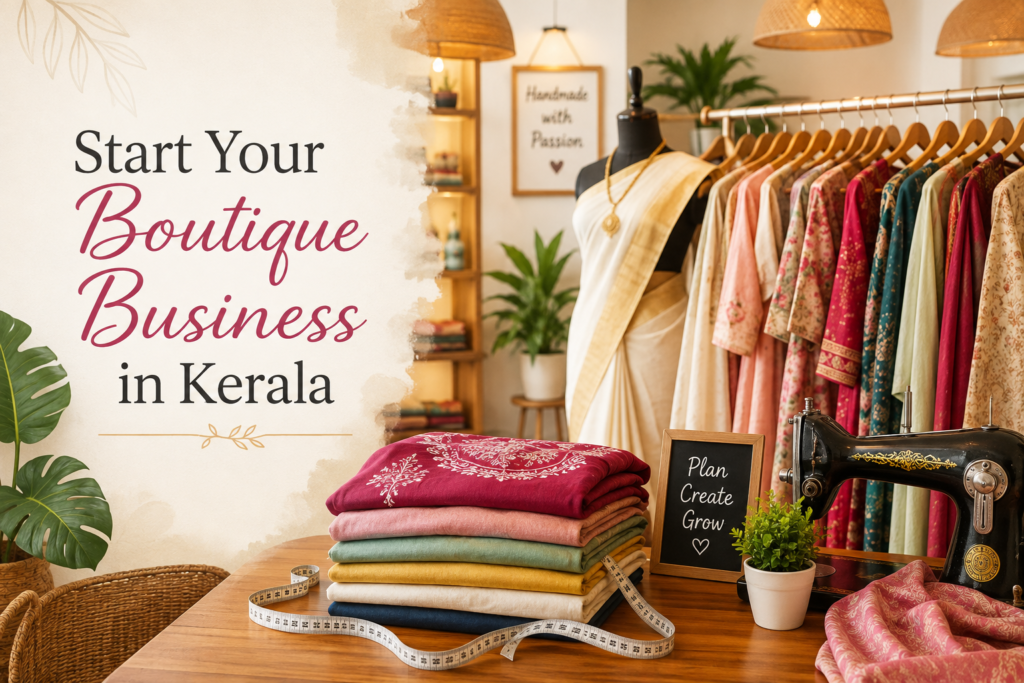
Starting a boutique business in Kerala can be a good opportunity for people who love fashion, clothing, and creative design. Kerala has a strong demand for traditional wear, modern outfits, ethnic collections, bridal wear, and customised clothing.
You do not always need a large showroom or a huge investment to start. You can begin with a small collection, sell through social media, and gradually expand your business.
1. Choose Your Boutique Niche
The first step is to decide what type of clothing you want to sell. A clear niche helps you identify your customers and plan your products.
Some popular boutique niches in Kerala include:
- Kerala traditional wear
- Sarees and set sarees
- Salwar suits and kurti collections
- Western wear
- Office wear for women
- Bridal and wedding wear
- Kids’ clothing
- Customized dresses
- Designer blouses
- Plus-size fashion
- Festival collections
For example, instead of selling every type of clothing, you can focus on customized ethnic wear for working women. This makes your boutique easier to position and promote.
2. Research Your Target Customers
Before purchasing products, understand who you want to serve.
Think about:
- Age group
- Location
- Income level
- Fashion preferences
- Shopping habits
- Preferred price range
- Occasions they shop for
For example, college students may prefer affordable and trendy outfits, while working women may look for comfortable office wear and premium ethnic collections.
Customer research can help you avoid investing money in products that may not sell.
3. Study Your Competitors
Research other boutiques in your target area. Check their products, prices, Instagram pages, websites, offers, customer reviews, and marketing strategies.
Look for gaps in the market.
For example, if many boutiques sell expensive designer wear, you could focus on affordable customised clothing. If competitors mainly operate offline, you could build a strong online boutique.
Your goal should not be to copy competitors. Instead, identify what you can offer differently.
4. Decide on Your Business Model
You can start your boutique in different ways.
Physical Boutique
A physical store allows customers to see, touch, and try the products. It can work well in areas with good foot traffic.
However, rent, interiors, electricity, staff, and inventory can increase your starting cost.
Online Boutique
An online boutique can be started with lower overhead costs. You can use Instagram, WhatsApp, a website, and other digital channels to promote your products.
This model is useful if you want to start from home.
Home-Based Boutique
A home-based boutique allows you to maintain a small inventory and meet customers by appointment.
It can be a practical option for beginners who want to test their business idea before opening a physical store.
5. Create a Business Budget
Calculate your expected startup expenses before investing.
Your budget may include:
| Expense | Examples |
|---|---|
| Inventory | Dresses, sarees, fabrics, accessories |
| Store | Rent and deposit |
| Interiors | Racks, mirrors, lighting |
| Branding | Logo, packaging, visiting cards |
| Website | Domain, hosting and development |
| Marketing | Instagram, Google and Meta advertising |
| Packaging | Bags, boxes and labels |
| Equipment | Computer, billing system and printer |
| Tailoring | Sewing machines and tailoring costs |
Start with an amount you can manage. Avoid purchasing a large quantity of stock before understanding customer demand.
6. Find Reliable Suppliers
Your suppliers can directly affect your product quality and profit margin.
You can source products from wholesalers, manufacturers, textile markets, local designers, or fabric suppliers.
Before selecting a supplier, compare:
- Product quality
- Wholesale price
- Minimum order quantity
- Delivery time
- Return or replacement policy
- Customisation options
- Fabric quality
Always check samples before placing large orders.
7. Build Your Boutique Brand
A boutique needs more than good products. Customers should remember your brand.
Choose:
- A unique boutique name
- A professional logo
- Brand colours
- A clear brand message
- Attractive packaging
- Consistent social media designs
Your brand should communicate what makes your boutique different.
For example, your positioning could be “Affordable customised ethnic wear for modern Kerala women.”
8. Complete the Required Business Registrations
Before starting operations, check which registrations, licences, tax requirements, and local permissions apply to your specific business structure and location in Kerala.
Depending on your business, you may need to consider registrations such as:
- Business registration
- PAN
- Bank account for the business
- GST registration, where applicable
- Local trade licence or related municipal/panchayat permissions
- Udyam/MSME registration, if applicable
The exact requirements can vary depending on turnover, business structure, location, and whether you sell online or offline. Check the current requirements with the relevant government authorities or a qualified professional before registering.
9. Create Your Online Presence
Even if you have a physical boutique, an online presence can help you reach more customers.
Create professional profiles on platforms such as Instagram, Facebook, and WhatsApp Business.
Post:
- Product photographs
- Reels
- Styling ideas
- New arrivals
- Customer reviews
- Behind-the-scenes content
- Festival collections
- Offers
- Customisation options
Use clear product information such as price, available sizes, fabric, colours, and ordering instructions.
10. Build a Boutique Website
A website can make your boutique look more professional and help customers discover your products through Google.
Important website pages include:
- Home
- About Us
- Shop
- Collections
- Customised Stitching
- Size Guide
- Contact Us
- Shipping Policy
- Return Policy
- Privacy Policy
You can also publish fashion blogs to attract organic traffic.
For example, blog topics could include:
- Traditional Kerala Dress Ideas for Women
- Best Onam Outfits for Women
- How to Choose the Right Blouse for a Saree
- Office Wear Ideas for Women
- Latest Kerala Boutique Fashion Trends
11. Use Local SEO
If you have a physical boutique, local SEO can help customers find you when they search for boutiques in your area.
Optimise your Google Business Profile with:
- Correct business name
- Address
- Phone number
- Opening hours
- Website
- Product photographs
- Store photographs
- Customer reviews
Use location-based keywords naturally on your website, such as “women’s boutique in Kerala”, “boutique in Kochi”, or the specific city or locality you serve.
12. Promote Your Boutique
Marketing is essential for bringing customers to your boutique.
You can use:
Instagram Marketing:
Post reels, product photos, styling videos, customer transformations, and new collections.
WhatsApp Marketing:
Create a customer list and share new arrivals, festival collections, and special offers without spamming customers.
Google Ads:
Use search advertising to reach people actively searching for products or boutiques.
Meta Ads:
Target customers based on location, age, interests, and shopping behaviour.
Influencer Marketing:
Collaborate with relevant local creators to showcase your products.
Referral Marketing:
Give existing customers an incentive to recommend your boutique to friends and family.
13. Focus on Product Photography
Fashion is highly visual, so product photography matters.
Use:
- Good lighting
- Clean backgrounds
- Multiple angles
- Model photographs where appropriate
- Close-up fabric shots
- Size information
- Colour details
High-quality photographs can make even a small boutique look professional.
14. Provide Customisation
Customisation can help a boutique stand out from large fashion retailers.
You can offer:
- Custom stitching
- Blouse alterations
- Size adjustments
- Sleeve modifications
- Neckline options
- Fabric combinations
- Embroidery
- Personalised designs
Customers often value clothing that fits their personal style and measurements.
15. Track Your Sales and Expenses
Do not measure your business only by sales.
Track:
- Total sales
- Product cost
- Marketing cost
- Rent
- Staff expenses
- Packaging cost
- Delivery cost
- Profit margin
- Best-selling products
- Slow-moving products
This information helps you understand which products generate the most profit.
16. Start Small and Scale Gradually
One of the biggest mistakes beginners make is investing too much money at the beginning.
Instead, start with a limited collection. Test which products customers prefer. Reinvest part of your profits into new collections, marketing, branding, and inventory.
As your customer base grows, you can expand into a larger showroom, website, customised clothing, or additional product categories.
Common Mistakes to Avoid
Avoid these mistakes when starting a boutique business:
- Buying too much inventory
- Copying competitors
- Ignoring customer feedback
- Setting prices without calculating costs
- Using poor-quality photographs
- Ignoring online marketing
- Not tracking expenses
- Offering too many products at the beginning
- Ignoring customer service
- Failing to maintain consistent branding
How Much Money Do You Need to Start a Boutique in Kerala?
There is no single fixed investment amount because the cost depends on your business model.
A home-based online boutique can require much less investment than a physical showroom. A showroom will require additional spending on rent, deposit, interiors, equipment, staff, and inventory.
The safest approach is to prepare a detailed budget based on your chosen location, product category, inventory size, and business model before investing.
Final Thoughts
Starting a boutique business in Kerala can be a rewarding opportunity if you combine good products with strong branding, customer service, and digital marketing.
You do not need to start with a large showroom or a huge collection. Choose a specific niche, understand your customers, source quality products, build a strong brand, and use social media and SEO to reach potential customers.
Start small, test your products, understand your customers, and grow your boutique step by step.