
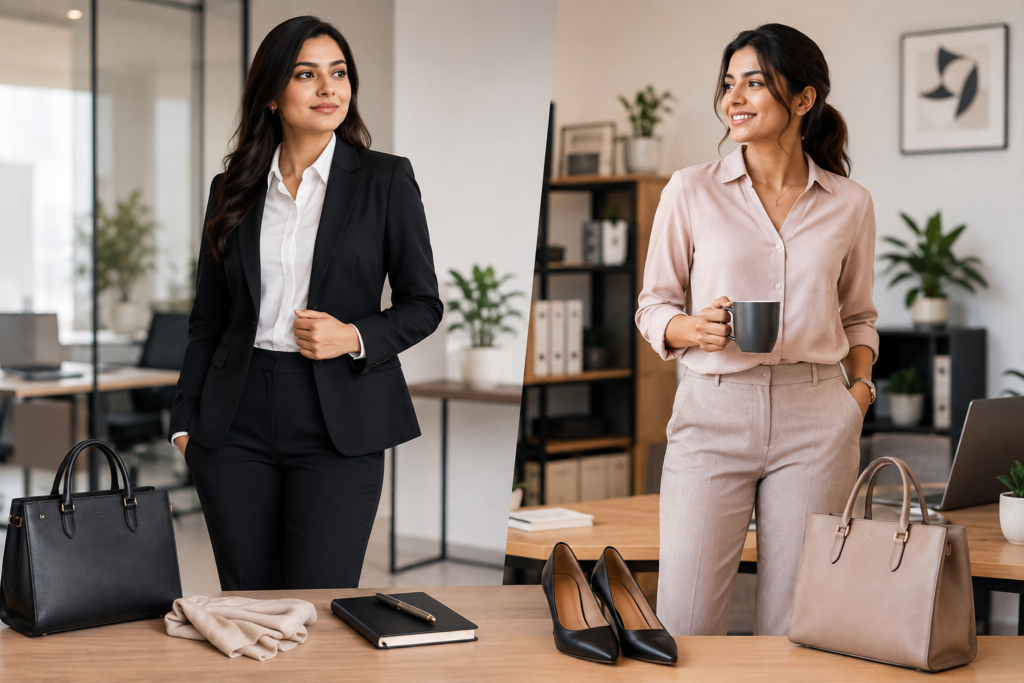
Choosing the right office outfit can help women look professional, confident, and comfortable throughout the workday. But not every workplace follows the same dress code. A corporate office may expect formal clothing, while a creative workplace may allow smart casual outfits.
Understanding the difference between formal and casual office wear makes it easier to choose suitable outfits for meetings, presentations, regular workdays, and office events.
What Is Formal Office Wear?
Formal office wear refers to polished and professional clothing that follows a structured dress code. It is commonly preferred in corporate offices, banks, law firms, professional meetings, interviews, and important presentations.
Popular Formal Wear for Women
- Formal shirts with trousers
- Blazers with trousers or skirts
- Tailored pantsuits
- Formal midi dresses
- Pencil skirts with professional tops
- Cotton or silk sarees with simple blouses
- Formal salwar suits
- Neutral-coloured kurtas with straight pants
Choose well-fitted clothes without excessive prints, embellishments, or flashy designs. Black, navy blue, white, beige, grey, brown, and pastel shades are usually easy to style for a formal workplace.
What Is Casual Office Wear?
Casual office wear is more relaxed than formal wear while still maintaining a professional appearance. It is suitable for workplaces that have a flexible dress code.
Popular Casual Office Wear for Women
- Smart cotton tops with trousers
- Polo shirts with formal pants
- Kurti with straight pants
- Simple midi dresses
- Well-fitted jeans with a professional shirt, where permitted
- Long skirts with modest tops
- Casual blouses with ankle-length trousers
- Simple Indian ethnic wear
Casual does not mean untidy. Clothes should always be clean, comfortable, and appropriate for the workplace.
Formal vs Casual Office Wear: Key Differences
| Feature | Formal Office Wear | Casual Office Wear |
| Style | Structured and polished | Relaxed and comfortable |
| Shirts/Tops | Formal shirts and blouses | Smart tops and casual shirts |
| Bottom Wear | Tailored trousers and skirts | Trousers, chinos, skirts or permitted jeans |
| Dresses | Structured midi dresses | Simple casual dresses |
| Indian Wear | Sarees, formal kurtas, salwar suits | Kurtis, simple ethnic sets |
| Colours | Neutral and subtle | More freedom with colours |
| Accessories | Minimal and elegant | Simple and versatile |
| Footwear | Formal flats, loafers or heels | Flats, loafers or clean casual shoes |
| Best For | Meetings, interviews and corporate offices | Regular workdays and flexible workplaces |
How to Choose the Right Office Outfit
1. Understand Your Workplace Dress Code
Before choosing an outfit, understand what your company expects. Some workplaces follow strict formal dress codes, while others allow business casual or smart casual clothing.
When you are unsure, choose a slightly more formal outfit. It is usually easier to dress down than to make an overly casual outfit look formal.
2. Consider Your Job Role
Your role can also influence your clothing choices.
For example, women working in banking, finance, law, or corporate management may prefer formal shirts, trousers, blazers, and sarees.
Creative professionals may have more freedom to experiment with colours, patterns, accessories, and contemporary styles.
3. Prioritize Comfort
Office clothing should allow you to move and work comfortably. Avoid extremely tight clothing, uncomfortable footwear, or fabrics that make you feel uncomfortable during long working hours.
Cotton, linen blends, rayon, and other breathable fabrics can be useful for everyday office wear, especially in warm weather.
4. Choose the Right Fit
Fit can make a simple outfit look professional. Avoid clothes that are excessively loose or tight.
A well-fitted shirt with straight trousers can look more polished than an expensive outfit with an unsuitable fit.
Best Formal Office Outfit Ideas for Women
Formal Shirt and Trousers
A crisp shirt paired with tailored trousers is one of the easiest formal combinations. Add a blazer for important meetings or presentations.
Blazer and Trousers
A structured blazer instantly gives an outfit a professional appearance. Pair it with a simple blouse, tailored trousers, and minimal accessories.
Saree with a Simple Blouse
A well-draped saree can be an excellent formal Indian office outfit. Choose simple fabrics, subtle colours, and a neat blouse design for a professional appearance.
Kurta and Straight Pants
A solid or lightly printed kurta with straight pants creates a comfortable and professional ethnic look. Add simple flats and minimal jewellery.
Formal Midi Dress
A modest midi dress in a solid colour can work well in offices that permit western formal dresses. Choose a comfortable length and a professional neckline.
Best Casual Office Outfit Ideas for Women
Kurti and Pants
A comfortable kurti paired with straight pants is a practical option for everyday office wear. Choose simple prints or solid colours for a polished look.
Smart Top and Trousers
Pair a clean, well-fitted top with ankle-length trousers. Add loafers or flats for a comfortable office-ready look.
Jeans and Shirt
If your workplace permits jeans, pair dark or medium-wash jeans with a structured shirt or blouse. Avoid ripped, distressed, or excessively faded jeans.
Simple Midi Dress
A modest midi dress can provide both comfort and style. Choose simple patterns and avoid designs that are more suitable for parties or casual outings.
Office Accessories for Women
Accessories should complement your outfit without becoming distracting.
Consider:
- Small earrings
- Simple watches
- Minimal bracelets
- Structured handbags
- Thin belts
- Simple scarves
- Small necklaces
For formal workplaces, keep accessories minimal. Casual workplaces usually allow more flexibility.
Choosing the Right Footwear
Footwear can complete your office look.
For formal outfits, consider:
- Loafers
- Ballet flats
- Closed-toe heels
- Block heels
- Formal sandals where appropriate
For casual office wear, clean sneakers may be acceptable in some workplaces. Always follow your company’s dress code before choosing casual footwear.
Common Office Wear Mistakes to Avoid
Wearing Clothes That Are Too Casual
Graphic T-shirts, beachwear, slippers, and heavily distressed jeans may not be appropriate for most offices.
Choosing Uncomfortable Clothes
An outfit may look stylish but still be unsuitable if you cannot work comfortably in it.
Overusing Accessories
Too many accessories can make a professional outfit look distracting. Choose a few simple pieces instead.
Ignoring Grooming
Clean and well-maintained clothing should be combined with neat hair, clean footwear, and a professional overall appearance.
Following Trends Without Considering the Workplace
Fashion trends can be fun, but not every trend belongs in an office. Adapt current trends to your workplace dress code.
Formal or Casual: Which One Should You Choose?
The answer depends on your workplace, role, and occasion.
Choose formal office wear for:
- Job interviews
- Client meetings
- Business presentations
- Important conferences
- Corporate events
- Formal office environments
Choose casual or smart casual office wear for:
- Regular working days
- Creative workplaces
- Informal team meetings
- Flexible office environments
- Casual Friday, if your company follows it
If your office allows both styles, create a wardrobe that combines formal essentials with smart casual pieces. This gives you more outfit options without buying too many clothes.
How to Build a Simple Office Wardrobe
A practical office wardrobe can start with a few versatile pieces:
- Two or three formal trousers
- Two formal shirts
- Two smart casual tops
- One blazer
- One simple formal dress
- Two or three kurtas
- One pair of comfortable formal shoes
- One pair of flats or loafers
- One structured handbag
- A few simple accessories
You can mix and match these pieces to create different outfits throughout the week.
Final Thoughts
The best office outfit is one that matches your workplace dress code while making you feel comfortable and confident. Formal office wear works best for structured and professional environments, while casual office wear provides more freedom for everyday workplaces.
Whether you prefer a tailored trouser-and-shirt combination, an elegant saree, a comfortable kurta set, or a smart casual dress, focus on fit, comfort, neatness, and professionalism. With the right combination of basics, you can create a stylish office wardrobe that works for both formal and casual occasions.